
Capital:
Nouakchott
Currency
Ouguya
Best time to visit:
The most pleasant time for a trip to Mauritania is the dry season—from November to February—when temperatures are mild, travel is easier (especially in remote areas) due to low rainfall, and there are fewer mosquitoes around.
In a word:
Salamu’lekum (good morning)
Vaccines
None
Warnings:
– Avoid the summer months: the sun is strong and can be bothersome.
- Protect children from the sun with suitable clothing and making sure they are always well hydrated.
At the table:
The Mauritanian cuisine reflects the country's nomadic spirit, blending Arab, Berber, and African traditions. The national dish is *Thieboudienne*—a flavorful combination of rice, fish, and vegetables. Couscous is also widely popular, served with mutton, dromedary, or chicken and stewed vegetables.
Essential experiences:
Getting lost in the timeless alleyways of Chinguetti or Ouadane; wandering through the "Divorcees' Market" in Nouakchott; falling asleep in the heart of the Sahara Desert and enjoying one of the most beautiful starry skies ever.
It is a country often viewed merely as a transit point on the way to Dakar or Southern Africa—a real shame, given the great treasures Mauritania holds. It offers exceptional sand dunes and stunning plateaus, as well as ancient caravan cities designated as UNESCO World Heritage sites, and pristine nature—from the Banc d’Arguin National Park all the way to the Atlantic coast.
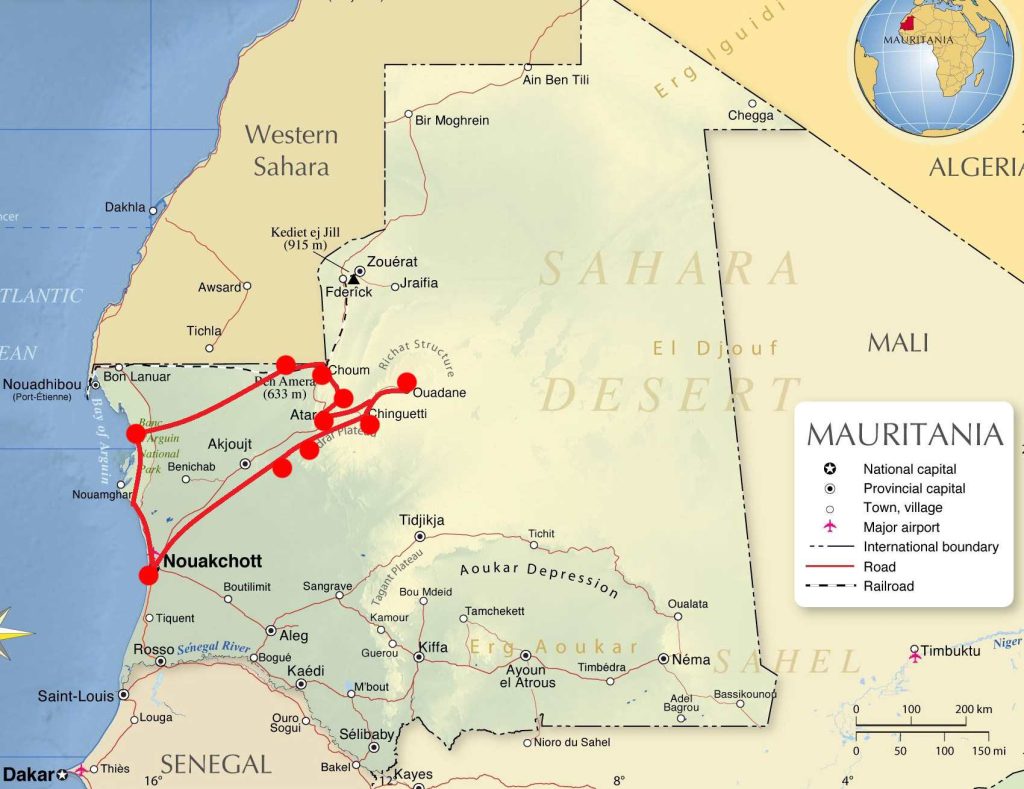
Our suggested itinerary (9 days) | |
two days: | Nouakchott; Azoueiga (desert experience among the dunes) |
two days: | Chinguetti (visit to the town and one of the various private libraries); relaxation at the Terjit oasis; Ouadane (visit to the fortified city); Richat (the heart of Africa) |
two days: | Atar (visit to the town market); Azougui (visit to the archaeological site and the mausoleum-tomb of Imam Al-Hadrami) |
three days: | Visit to the Ben Amira and Aisha monoliths; Sahara experience; Banc d’Arguin National Park (swim in the ocean and visit to the fishing village); Nouakchott (visit to the dromedary market, fish market, and "Divorced Women's Market") |
We land in the capital, Nouakchott, on an uncomfortable Tunisair flight and are immediately struck by the speed of the bureaucratic formalities—something not to be taken for granted in this part of Africa.
The The visa is obtained online. very easily (cost: 55 euros per person); no mandatory vaccines are required.
Our guide Hama, from the team Mauritania Desert Voyages, welcomes us upon arrival and leads us to our Sunset Hotel—a very charming hotel in the city center, which we will explore at a leisurely pace once the tour concludes.
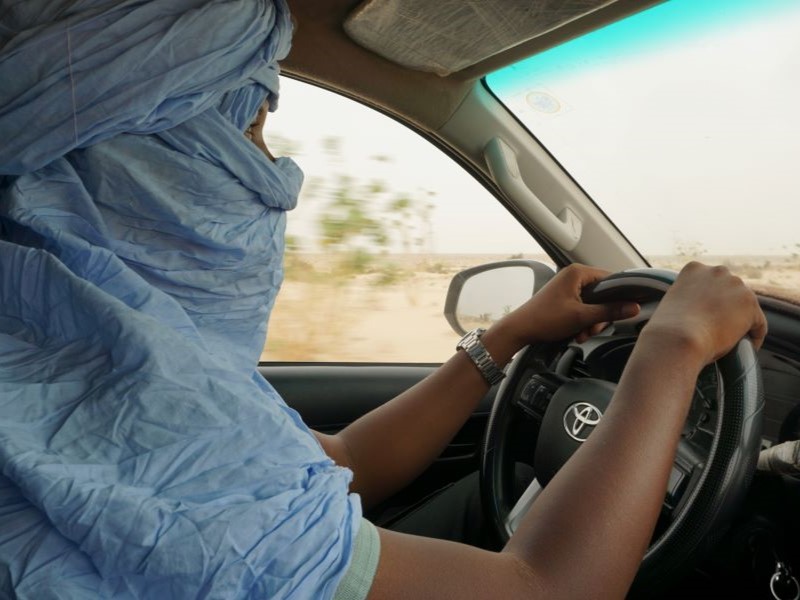
We set off to explore this new region, heading for Azoueiga, where we will spend the night. Famous for being home to some of the country’s highest and most captivating dunes—nestled within the striking Erg Amatlich desert—these towering dunes follow the course of a *oued*, an ancient riverbed.
The first capital of the Almoravid Empire—a Berber warrior dynasty that conquered territories stretching from Senegal to Spain in the 11th century—it is now a UNESCO World Heritage site.
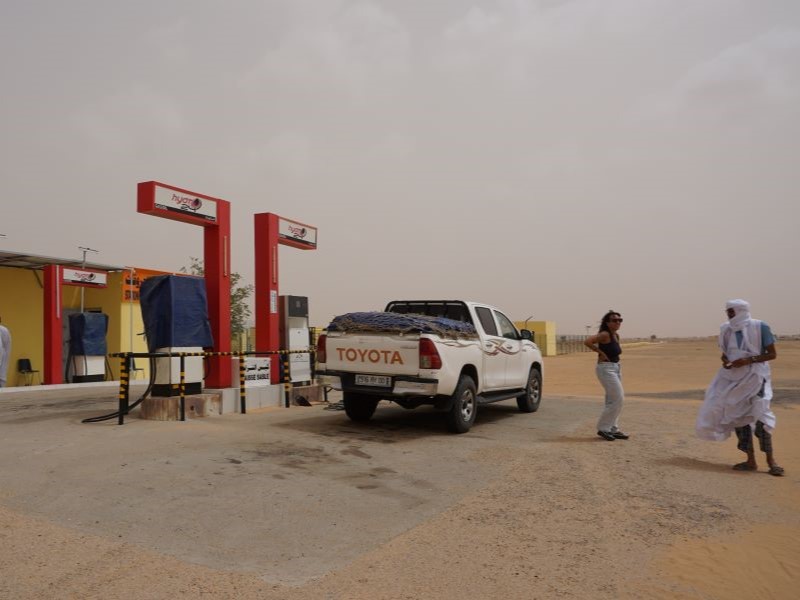
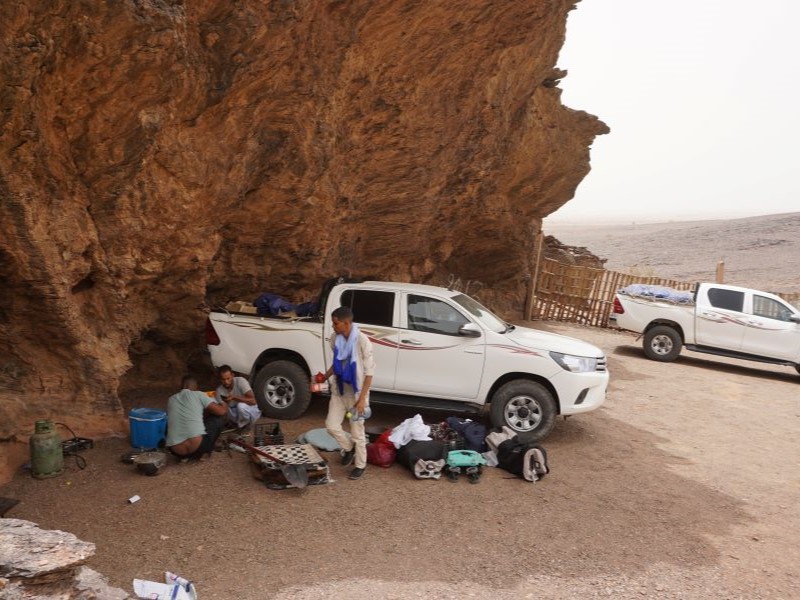
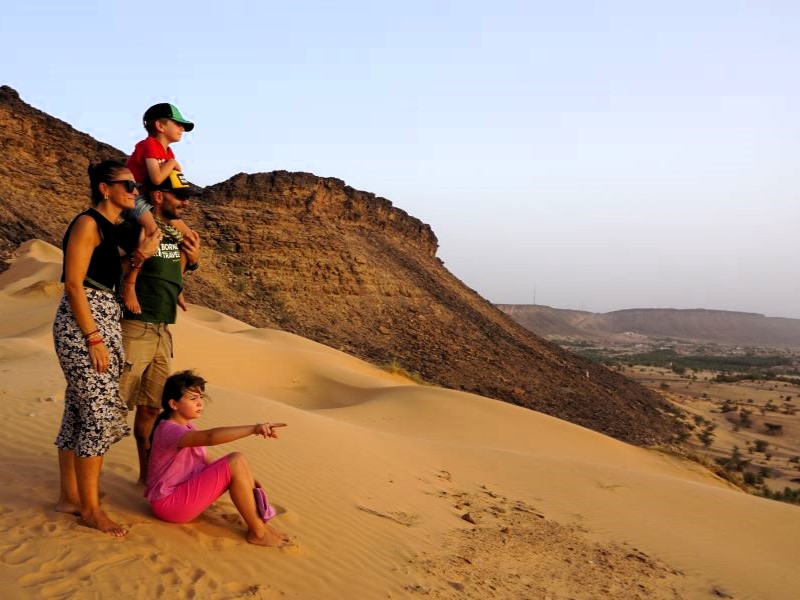
We set up camp—pitching the tents and the kitchen area—and climb one of the many golden dunes to admire a unique natural spectacle. It is here that you truly grasp the vastness, the sheer enormity of the Sahara. It is incredibly hot—so hot that, after a delicious dinner prepared by the talented Mohammed, we decide to sleep out in the open beneath a starry sky that feels close enough to touch... A truly unique night!
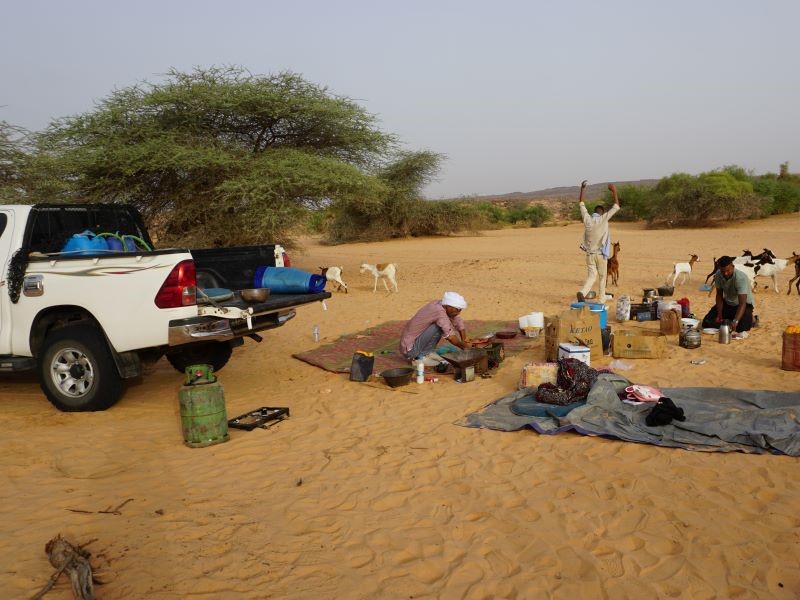
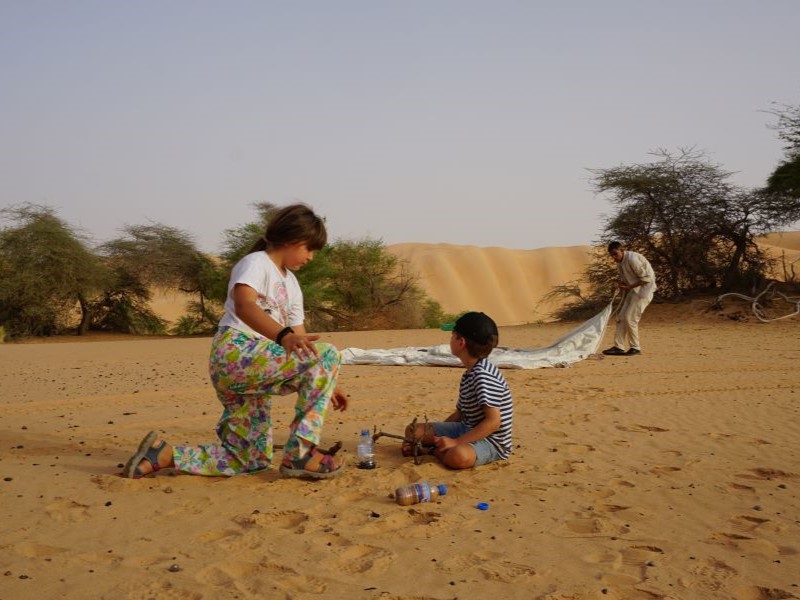
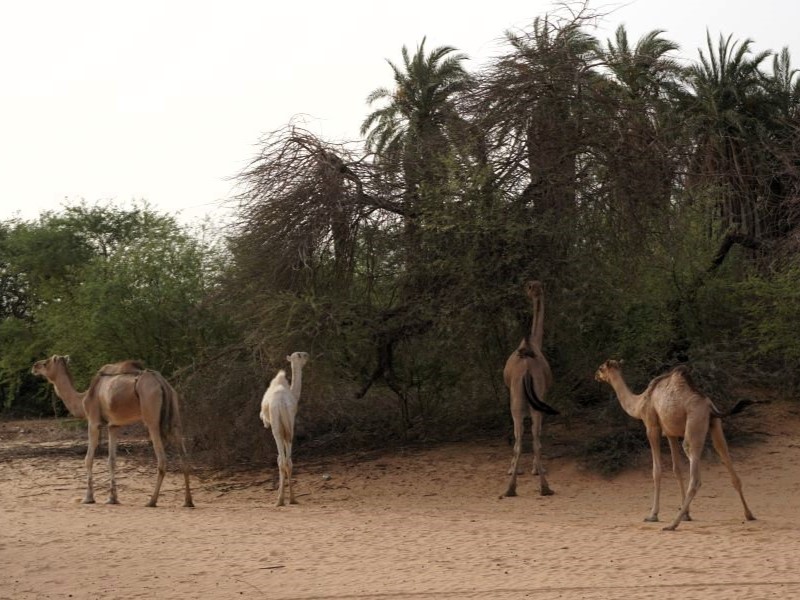
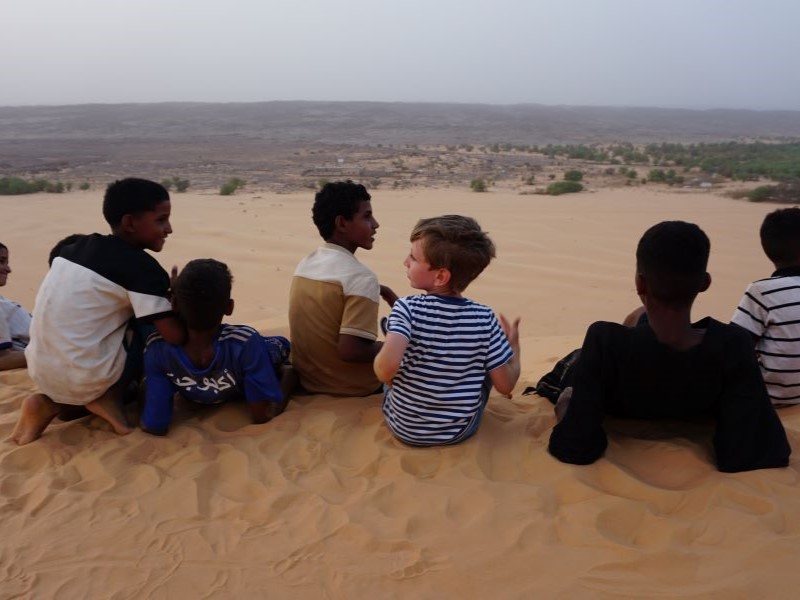
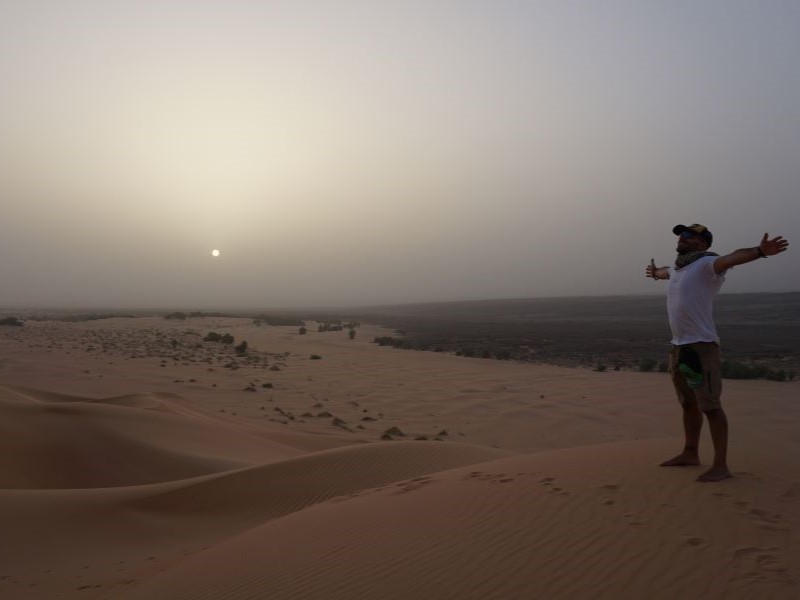
After a picture-perfect sunrise, with the sun shyly peeking out from behind the dunes, we set off again for Terjit. The rough desert track puts both our drivers' skills and our stomachs to the test, but Terjit makes every bit of the effort worthwhile!
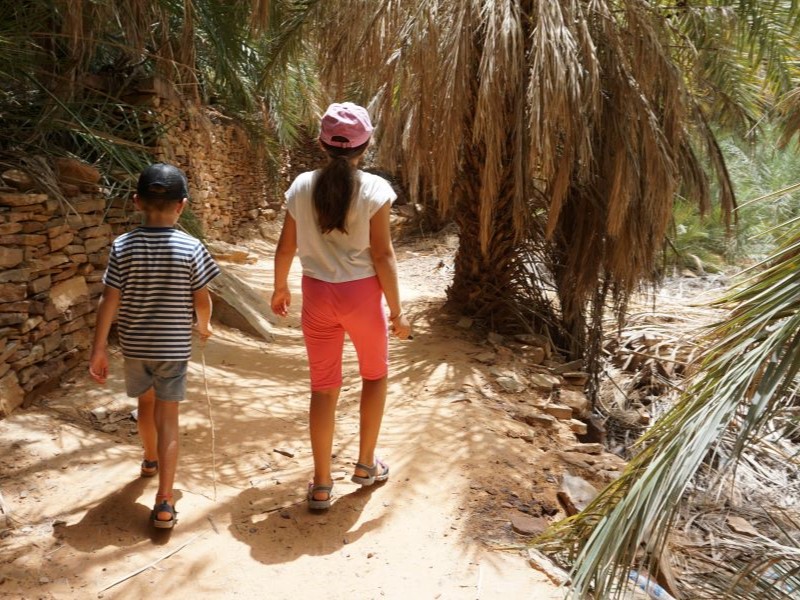
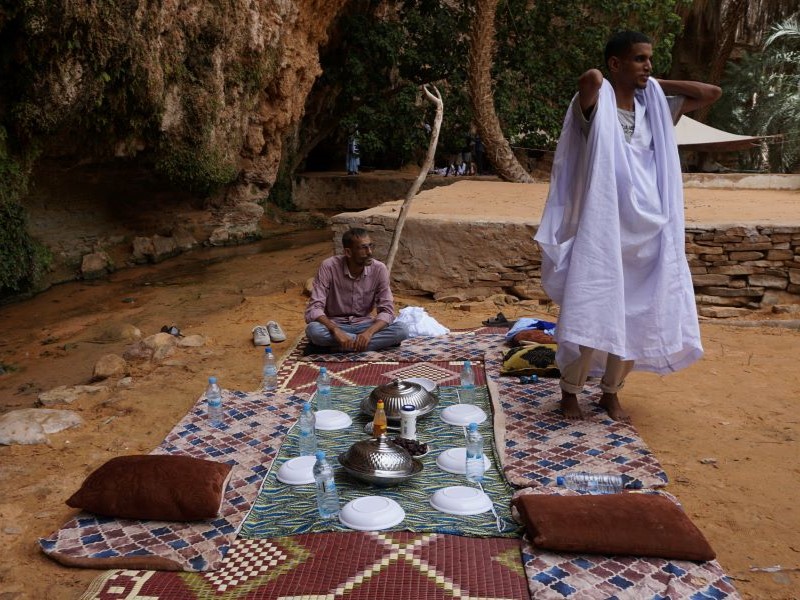
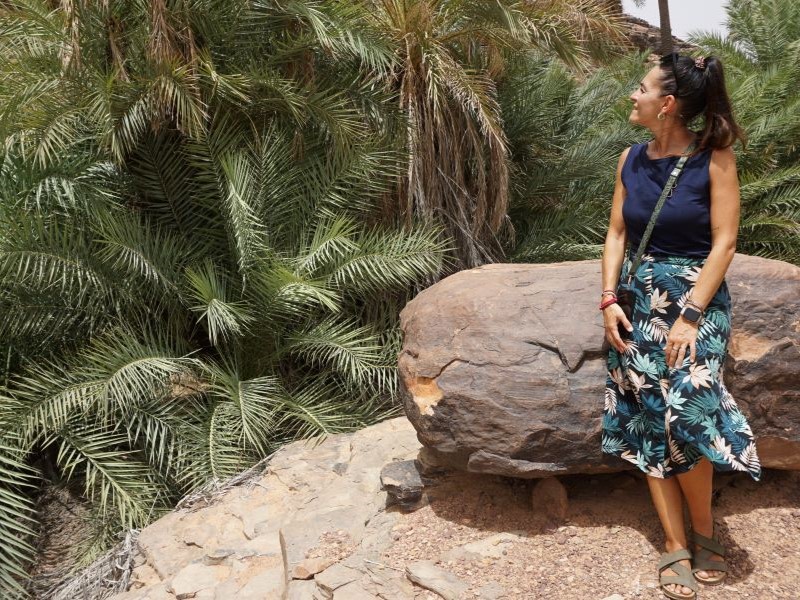
Terjit is a strip of palm groves bordered by large, reddish rock walls. Two springs gush forth at one end: one hot and one cold.
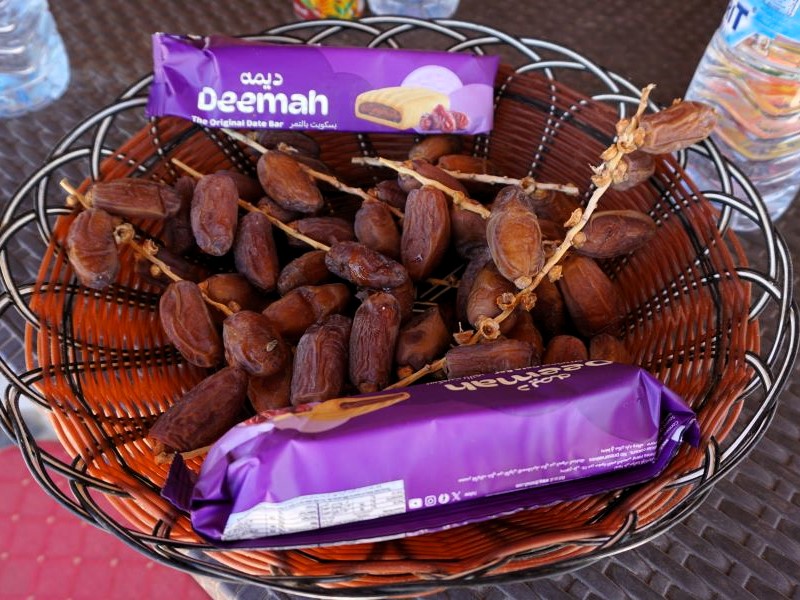
This is a place of coronations and weddings; the most important weddings of local tribes have been celebrated here, and the region's princes have been crowned here. It also serves as a natural air conditioner and is a paradise for dates—some of the finest and sweetest around!
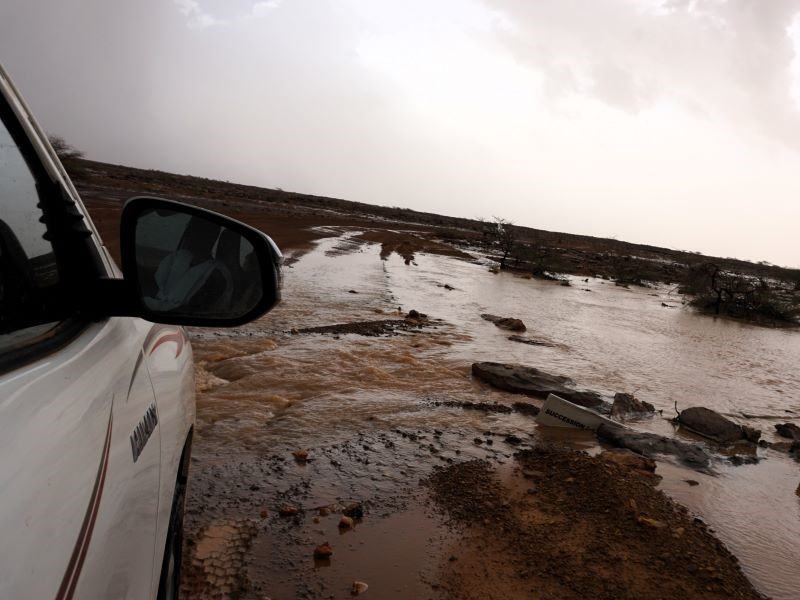
We set off just in time, because a while later a downpour kept us company for the rest of the afternoon. I had never seen rain in the desert—or, more importantly, its effects: the sudden, dangerous torrents—but we arrived in Chinguetti late in the afternoon!
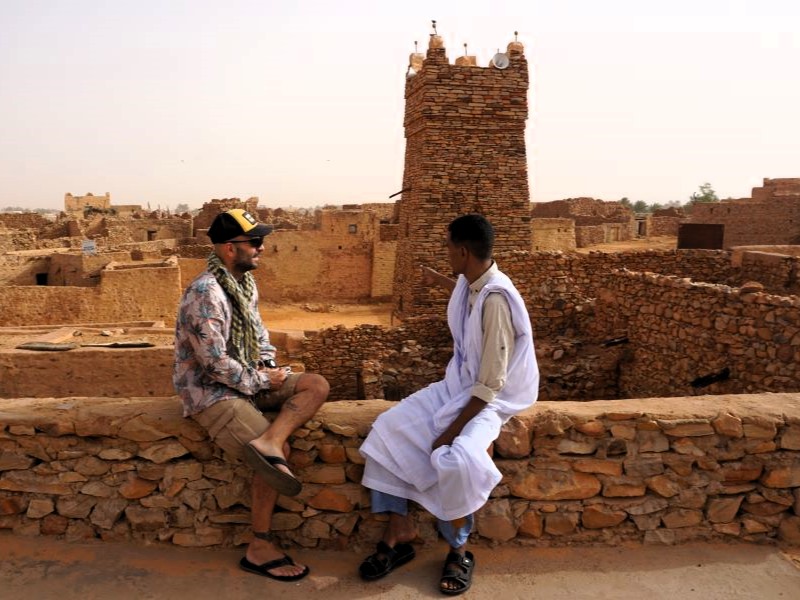
An ancient caravan hub between the Maghreb and sub-Saharan Africa, it is considered one of the most culturally advanced cities; around the 18th century, it was a beacon of science and philosophy, thanks to its libraries where scholars gathered to study.
Ancient manuscripts are preserved here—not in public buildings, but in private collections managed by local families and handed down from generation to generation.
For centuries, it was a crucial gathering point for pilgrims from Africa heading to Mecca.
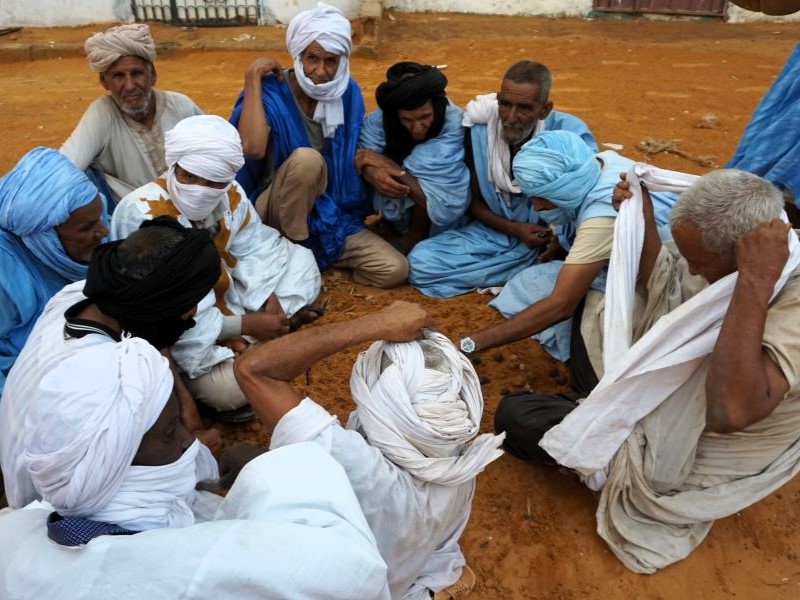
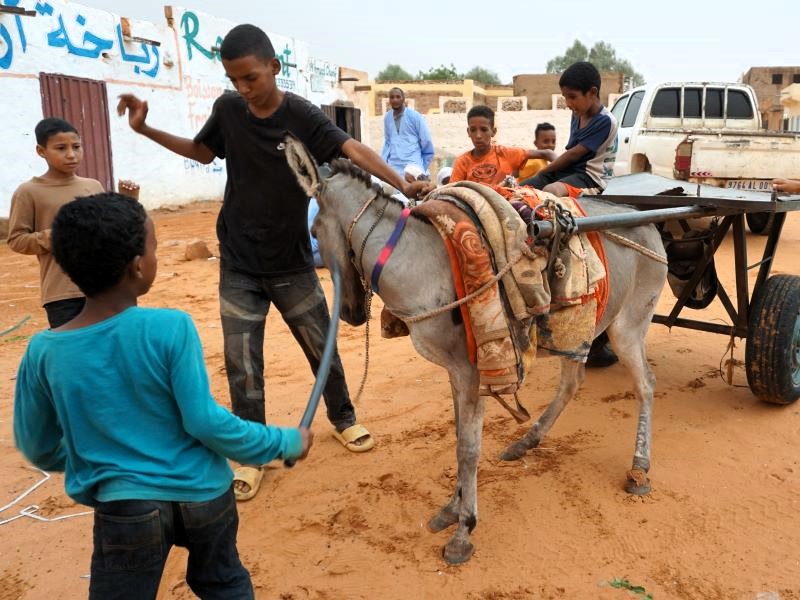
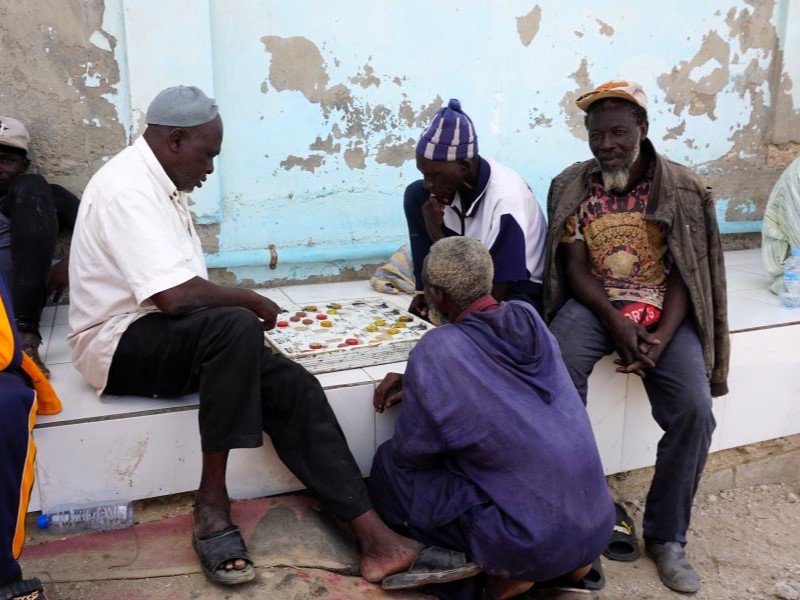
It has been under UNESCO protection since 1996 and wages a daily battle against the encroaching dunes of the Erg Warane, which threaten to swallow its ancient alleyways. It is a delight to stroll through its narrow red-earth lanes while old men play *dhama*, curious children joke and play, and the muezzin calls the faithful to the day's final prayer.
Chinguetti is essentially three cities in one; indeed, what we see today is effectively the third version. The first city was founded in 777 and lies entirely buried beneath the sand today. The current Old City emerged in the 13th century, and it was not until the early 20th century that French colonizers built a new city on a plateau to protect against desertification.
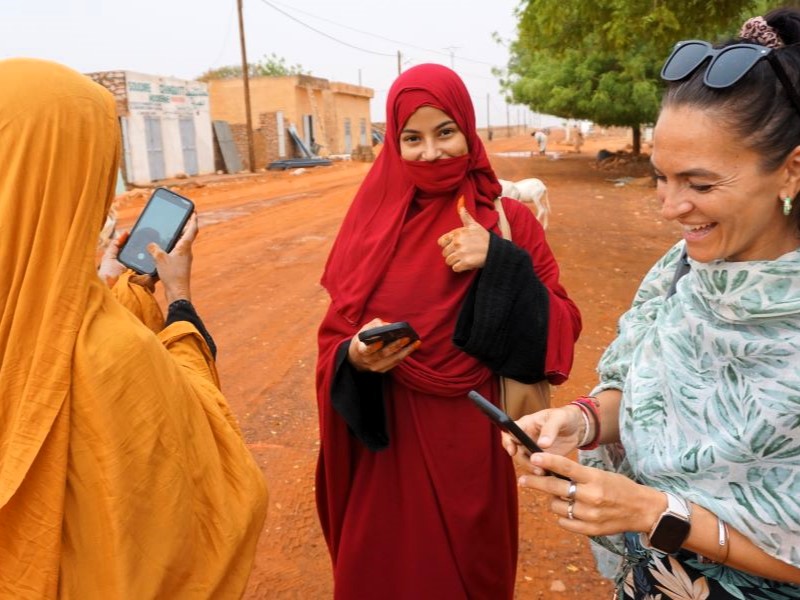
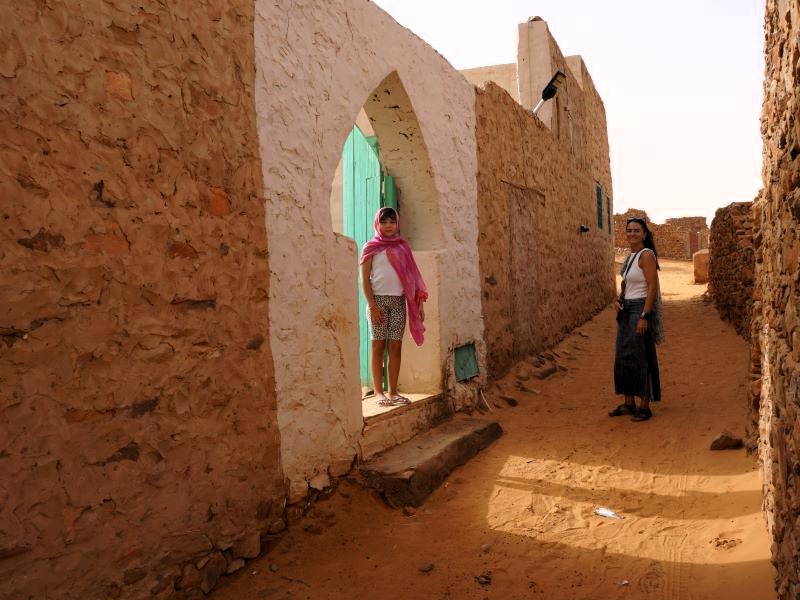
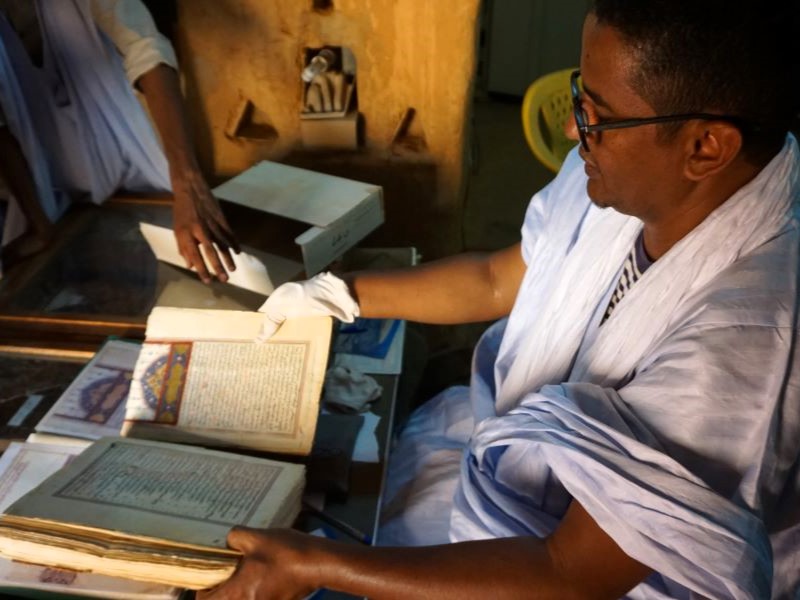
After a four-hour off-road journey through the desert, we arrive at Ouadane, a fascinating fortified town (ksar) on the southern ridge of the Adrar plateau.
For centuries it was one of the most important crossroads of trans-Saharan trade along the route from Morocco in Timbuktu, Mali, for the transit of gold and dates.
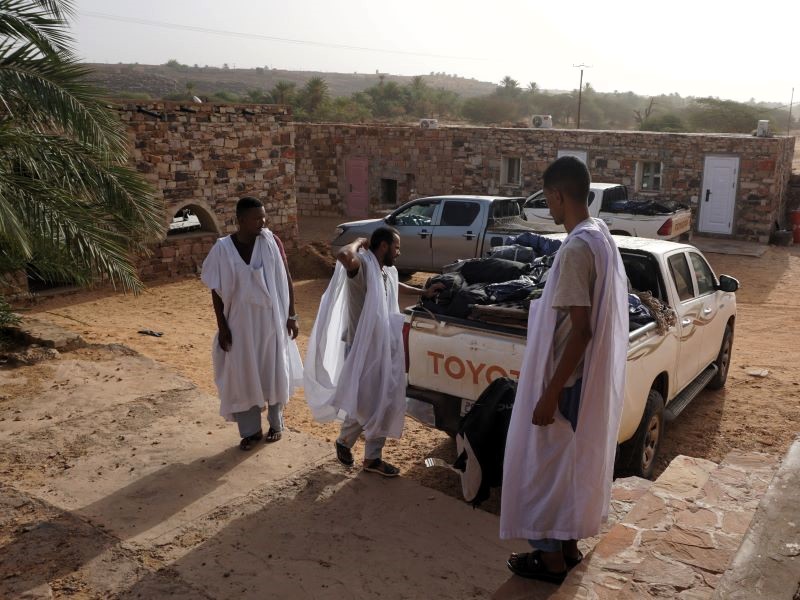
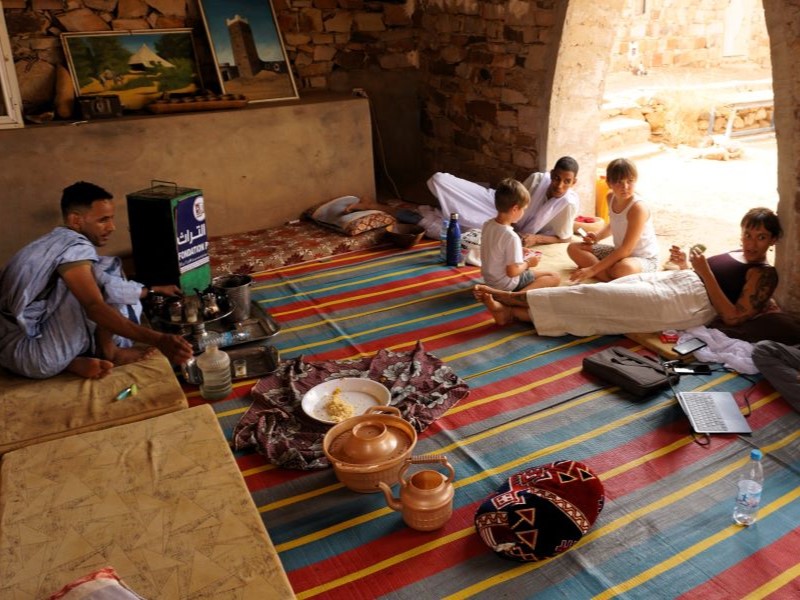
The old medieval quarter was built entirely of red sandstone and today forms a network of narrow alleyways, courtyard houses, and atmospheric ruined fortifications.
In the past, it was a major center of Islamic culture and scholarship, home to dozens of family libraries—much like Chinguetti—and its historic heart lies along the famous "Rue des 40 Savants" (Street of the 40 Scholars), the street where the city's forty most renowned families lived.
My advice? Lose yourself among the labyrinthine ruins at sunset to appreciate the history of the place and imagine throngs of dromedary caravans arriving from afar, bearing a thousand stories and adventures to tell.
Not far away—about 30 kilometers—lies the Richat Structure (Guelb er Richat), a gigantic circular geological formation 40 km in diameter that is visible even from space, so much so that astronauts use it as a landmark.
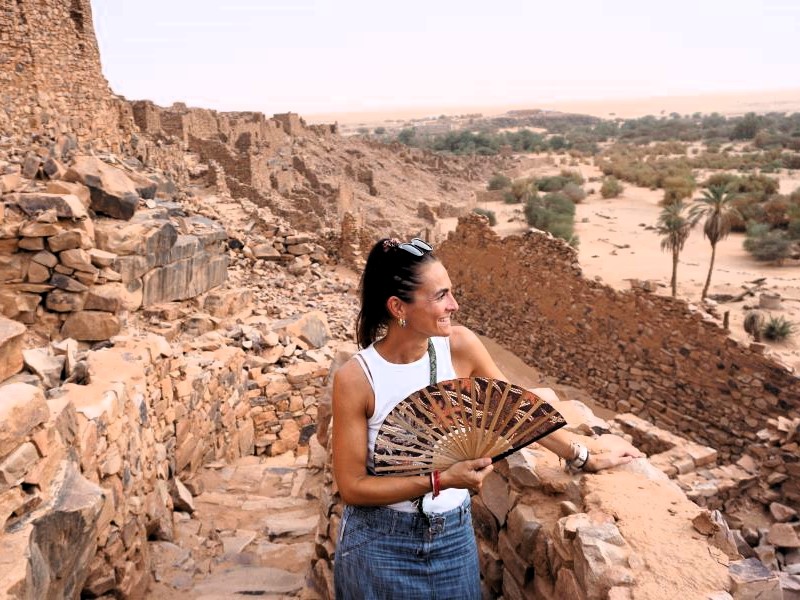
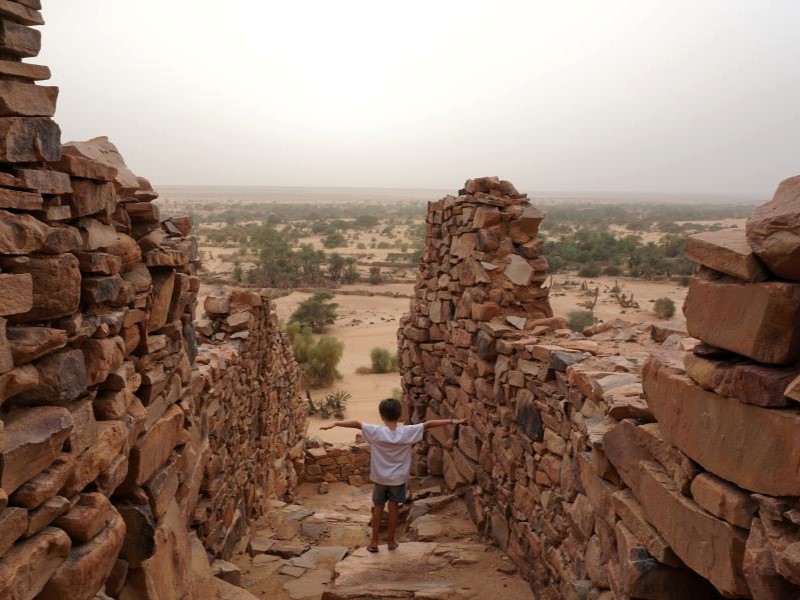
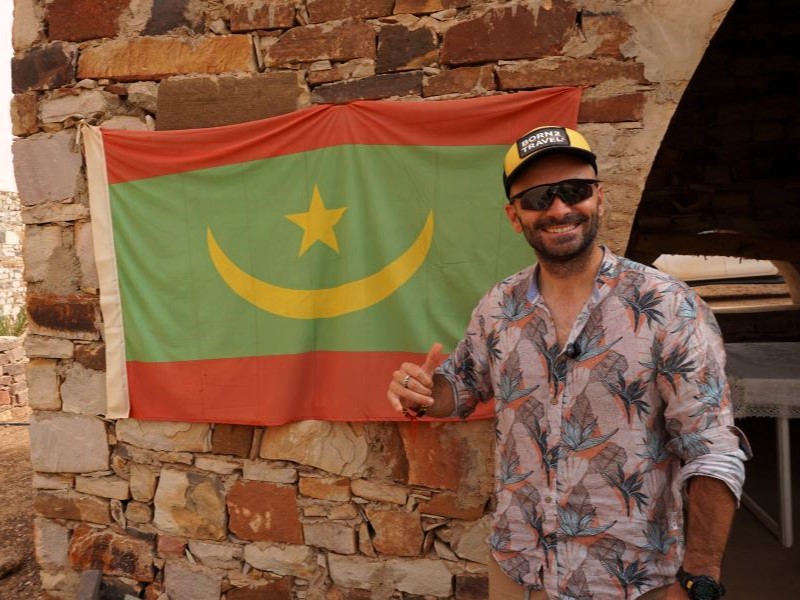
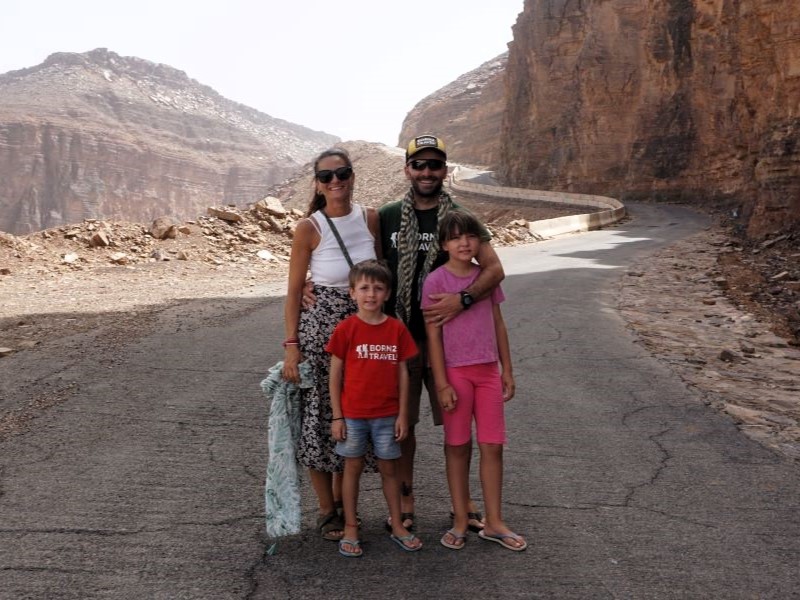
We leave our hotel early in the morning and head towards Atar, traveling along a semi-desert path and crossing the Ebnou Pass.
This pass is highly evocative and takes its name from M. Ould Ebnou, a prominent figure and magnate from Chinguetti who invested his personal fortune in rehabilitating the pass—a vital, rapid link to Chinguetti—thereby saving the town from isolation.
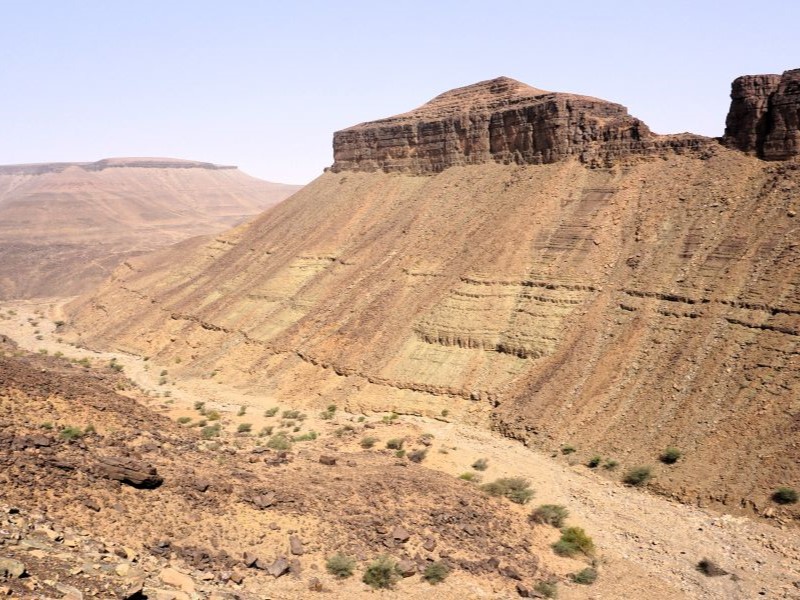
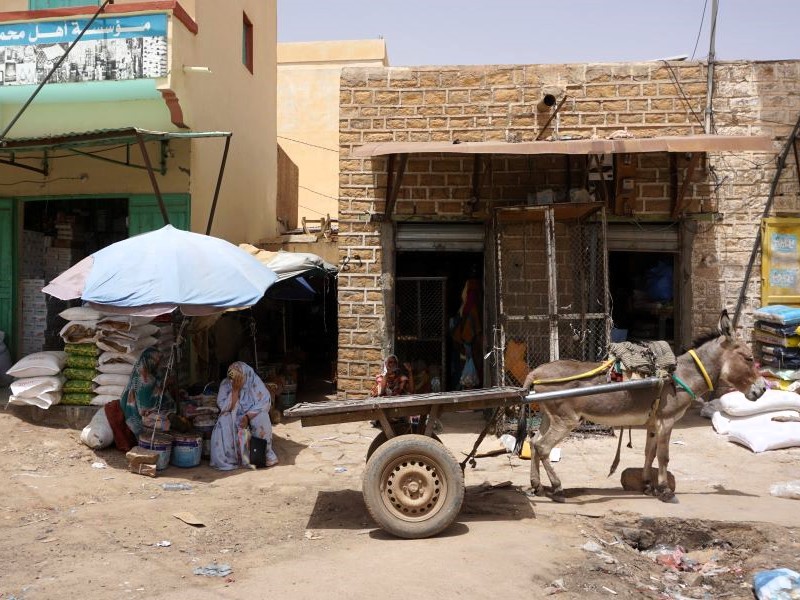
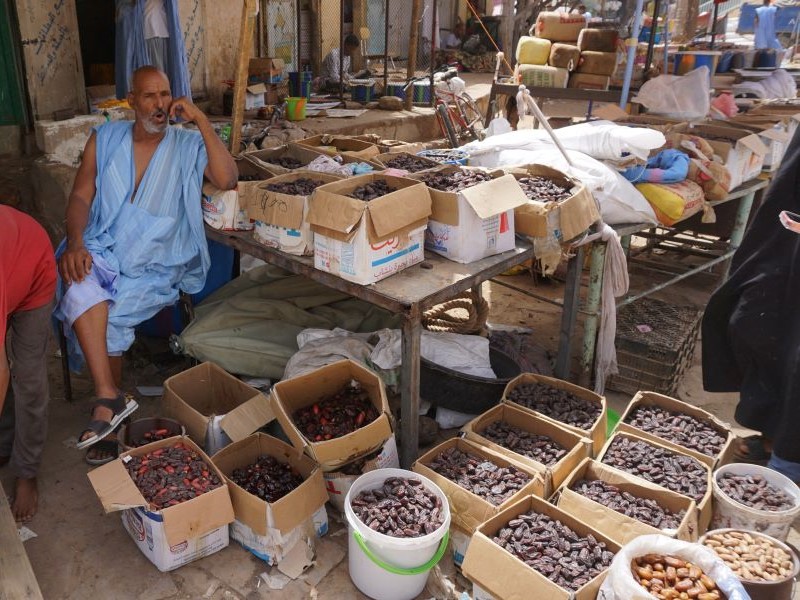
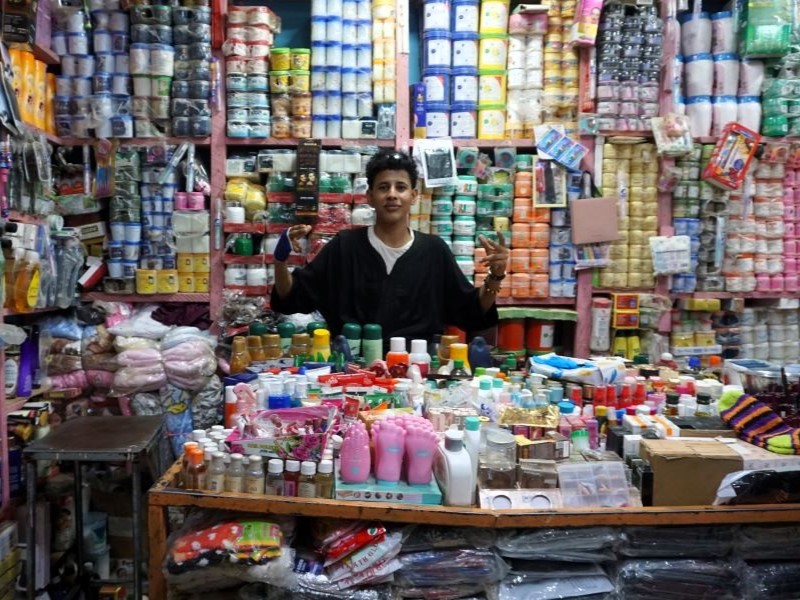
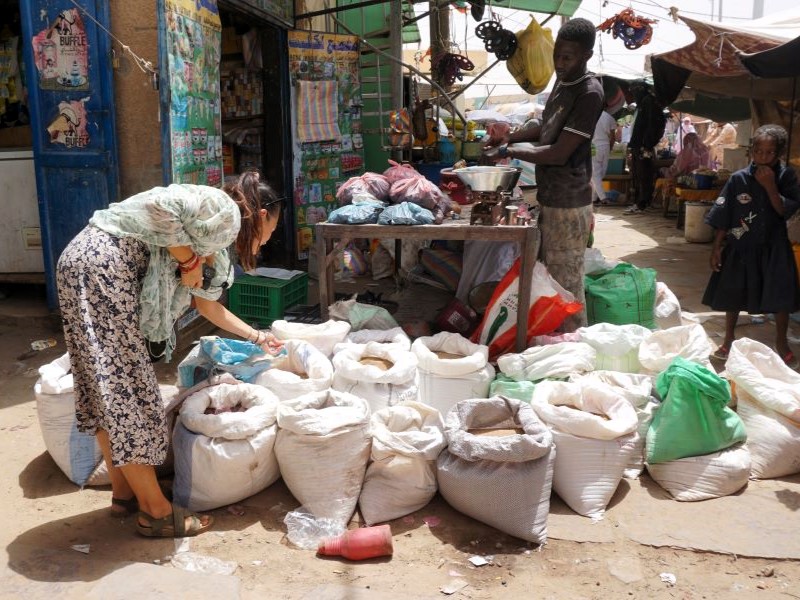
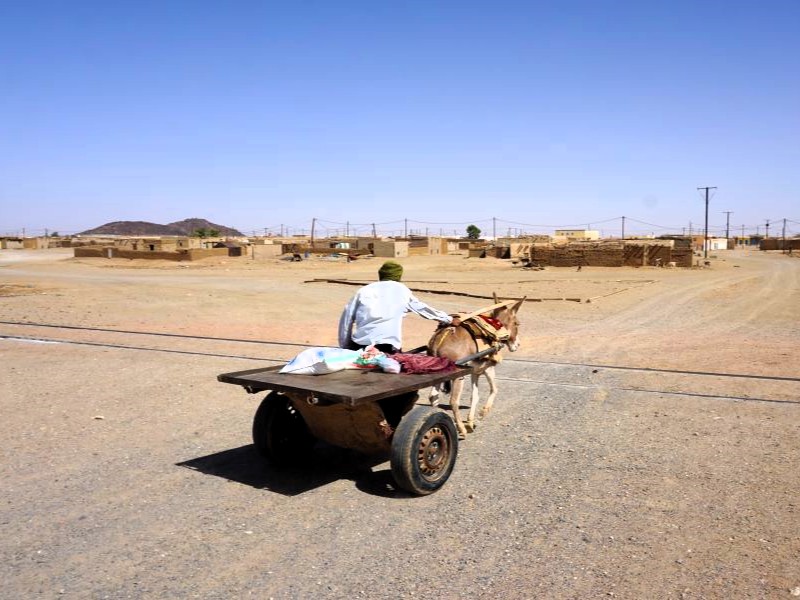
After about three hours, we arrive in Atar, famous for its market—a major trading hub for nomads and the inhabitants of Saharan oases.
Atar is situated in an oasis rich in palm groves; consequently, dates are the undisputed stars of this market.
Try the black ones—they're incredibly sweet!
We also take the opportunity to pop into the charming post office for the customary postcard, and the manager invites us into his office to finalize this important purchase.
We arrive at Azougui—our stop for the day—in the early afternoon.
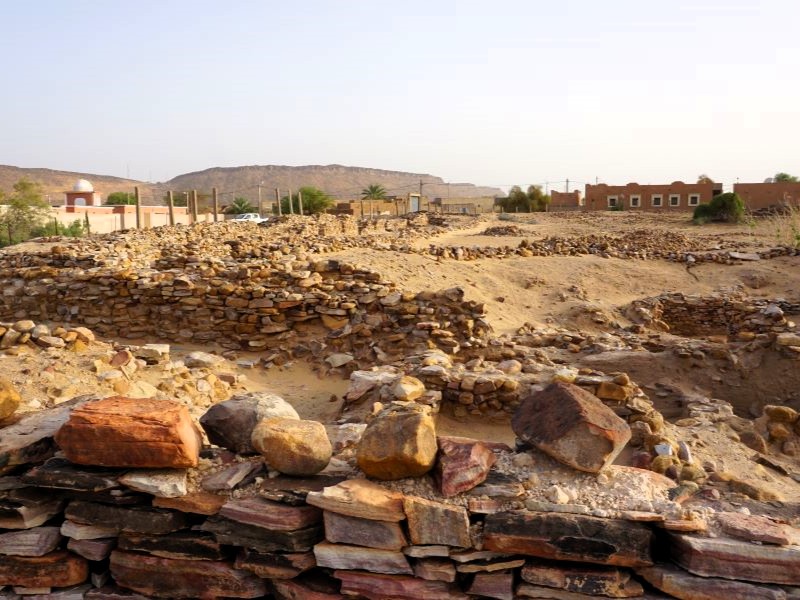
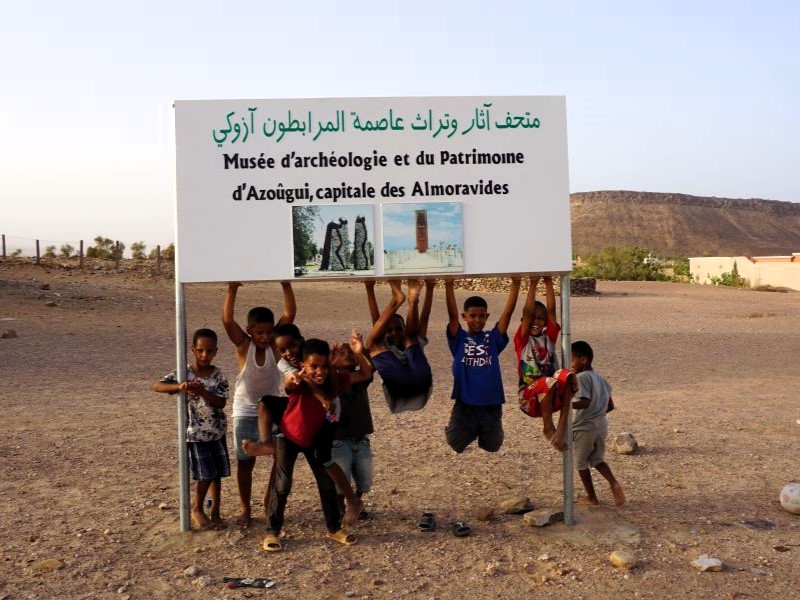
This small village, a UNESCO World Heritage Site, is one of the most important archaeological sites in Mauritania. In the 11th century, it became the first capital of the Almoravid dynasty, whose kingdom extended from the Ghana till Andalusia.
Today, it is still possible to glimpse parts of the ancient walls of the medieval fortress, the foundations of the Citadel, and various artifacts…
Not far away lies the mausoleum-tomb of Imam Al-Hadrami, a highly revered theologian and a religious figurehead for the Almoravids.
His figure is shrouded in numerous folk legends, and his tomb is a destination for local pilgrimages.
After enjoying a picturesque sunset with one of the tallest women in Azougui, we return to our charming hotel, Etoile du Nord, for dinner under the stars!
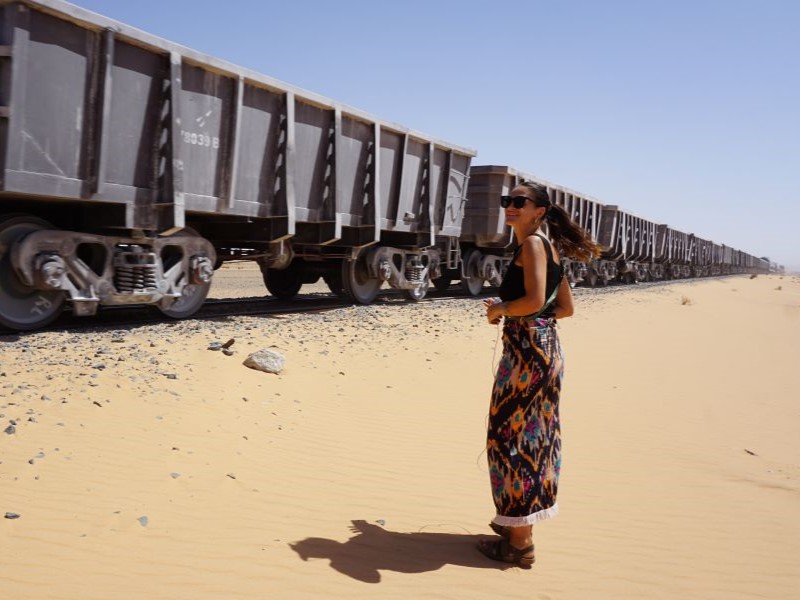
We set off again early in the morning and drive alongside the endless tracks, hoping to cross paths with the famous Iron Ore Train—one of the longest and heaviest in the world.
Spanning approximately three kilometers and consisting of 200 open freight cars pulled by four locomotives, it connects the inland mines with the ocean port of Nouadhibou—located on the Atlantic at the border with Western Sahara—covering a distance of 700 kilometers.
The quintessential travel experience involves secretly boarding one of the many open-top wagons and embarking on a journey lasting 12 to 20 hours, facing temperatures that can swing from +40°C to -5°C at night, alongside wind and hazardous iron dust.
It is forbidden for tourists, yet many travelers continue to secretly attempt the feat.
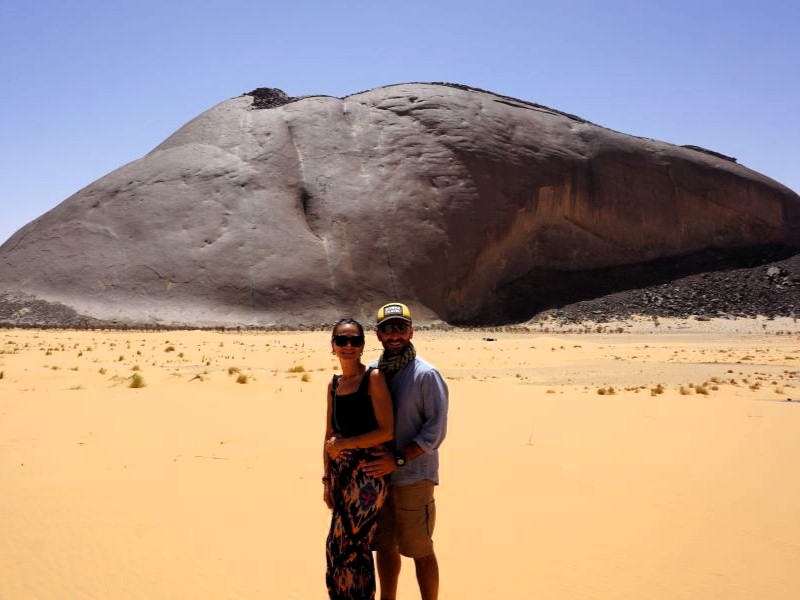
In the late morning, we arrive at Ben Amira, the largest monolith in all of Africa and second only to Ayers Rock.
Standing 633 meters tall, geologists maintain that if the hidden rock were also taken into account—much like an iceberg—it would be even larger than Uluru.
Legend says that Ben Amira and Aisha—the other monolith located 5 km away—were once a single block of stone. Following a fracture, the male (Ben Amira) separated from his wife (Aisha), taking with him two smaller stone blocks (their children) that now stand at the foot of the main monolith.
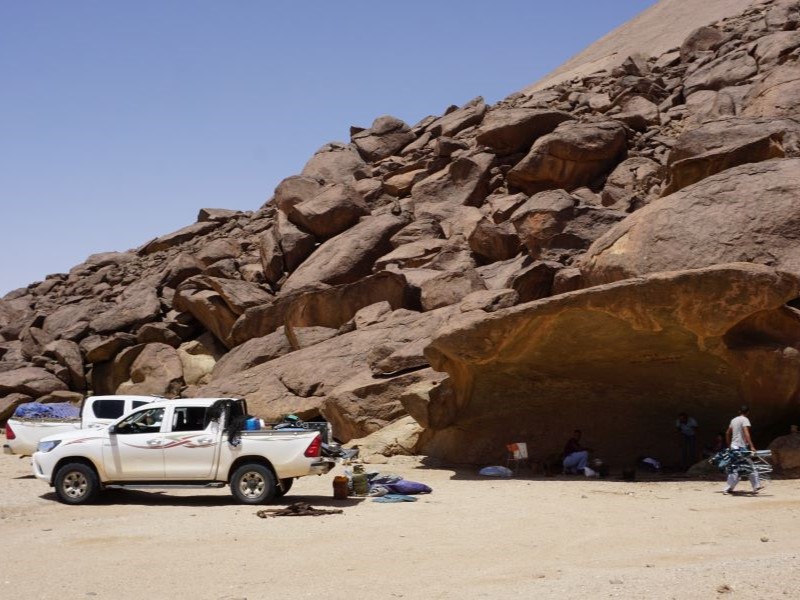
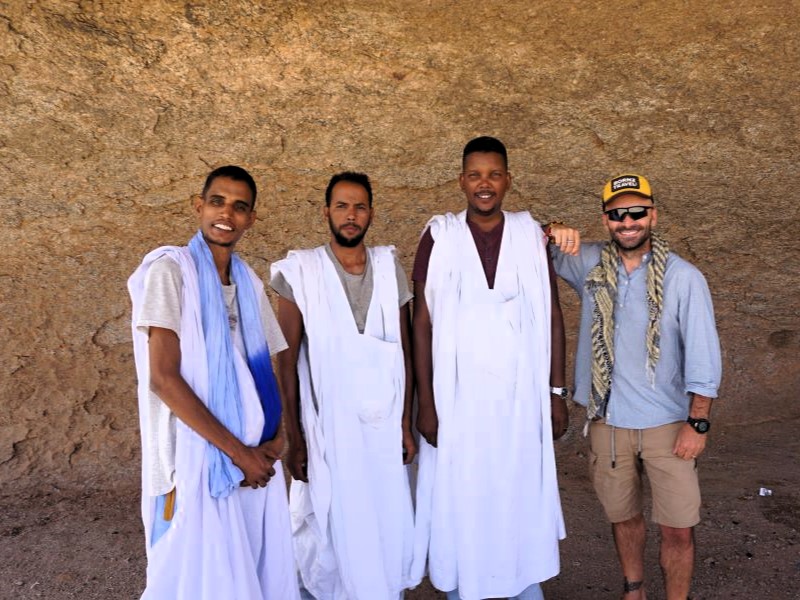
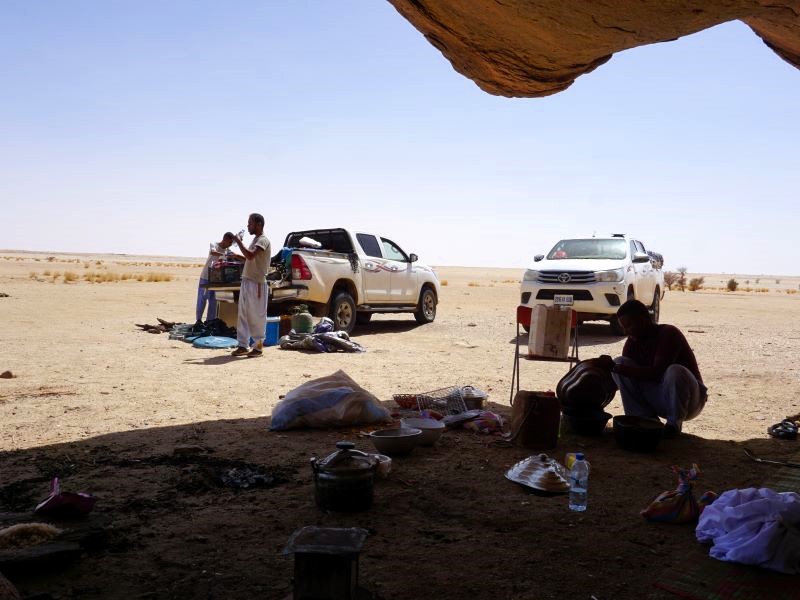
Mohammed, Hama, Said, and Lamin quickly set up the lunch site and immediately organize a goat-meat barbecue.
We are in an Aisha cave; the background is striking.
Incidentally, in 1999, to celebrate the new millennium, several international artists carved granite boulders, creating a magnificent open-air art gallery.
We set off again, trying to get as close to the coast as possible to optimize the schedule for tomorrow's long day.
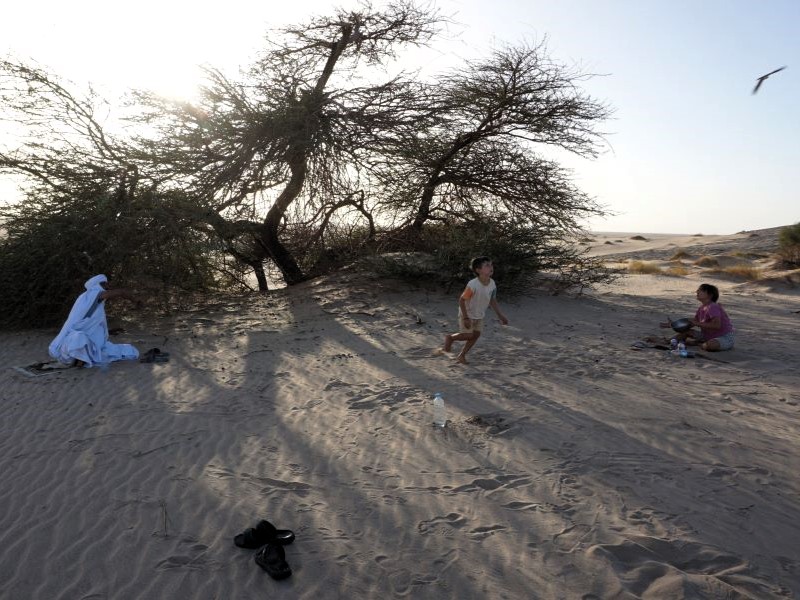
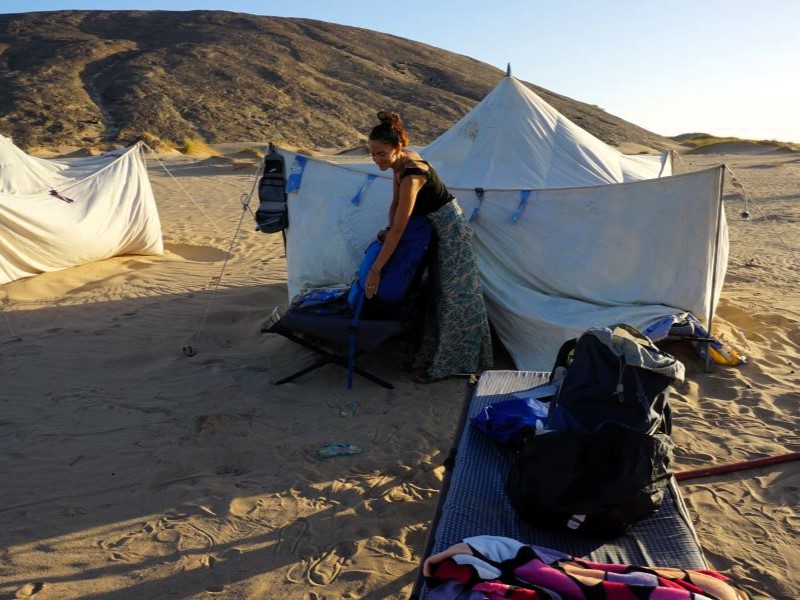
Before sunset, we stop, set up camp at the foot of a large granite boulder amidst the sand dunes, and settle in.
We admire one of the most beautiful starry skies ever, even though a cold wind picks up during the night—not only covering us in sand but also knocking down our tent twice; yet, that’s all part of the travel experience!
It’s quite a tough day today! Our first stop is Banc d’Arguin National Park—a UNESCO World Heritage site and a 12,000 km² area where the dunes plunge straight into the ocean waters!
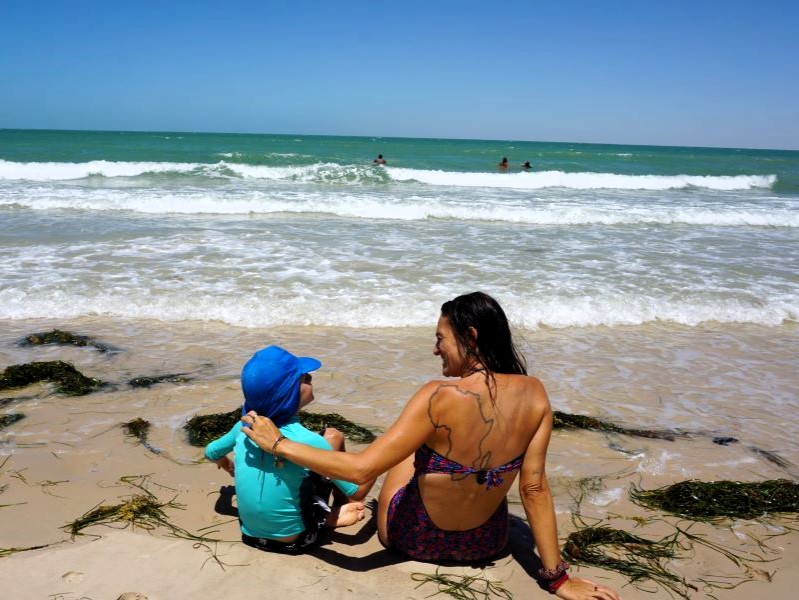
We take the opportunity to change and dive into the water ourselves to cool off.
In moments like those, you can’t help but marvel at how incredible this land is… just a few hours earlier, we were battling desert sands in one of the most arid regions, and shortly after, here we were, swimming in waters teeming with fish. Indeed, thanks to the convergence of cold and warm currents and nutrients carried by the winds, the seabed is rich in marine life.
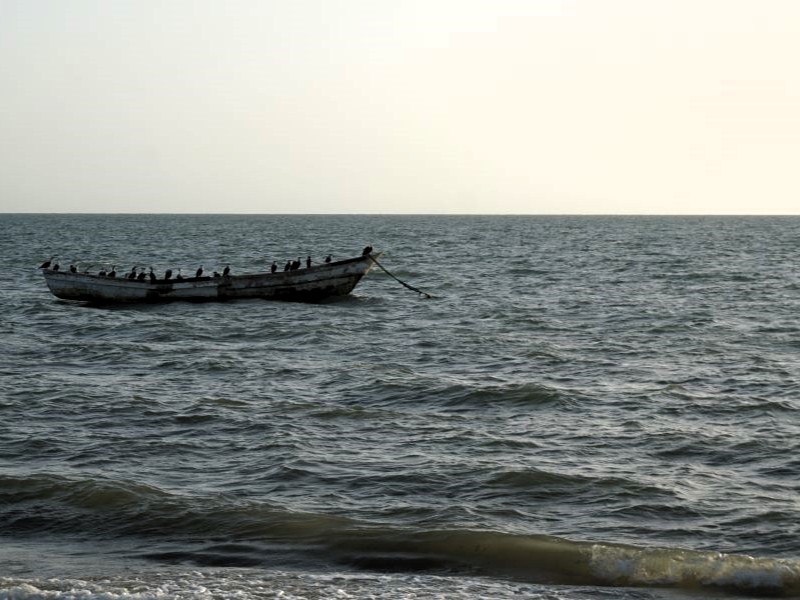
It is also considered an ornithological paradise, as it is home to more than two million migratory birds—such as flamingos, cormorants, and pelicans—that arrive here from the north.
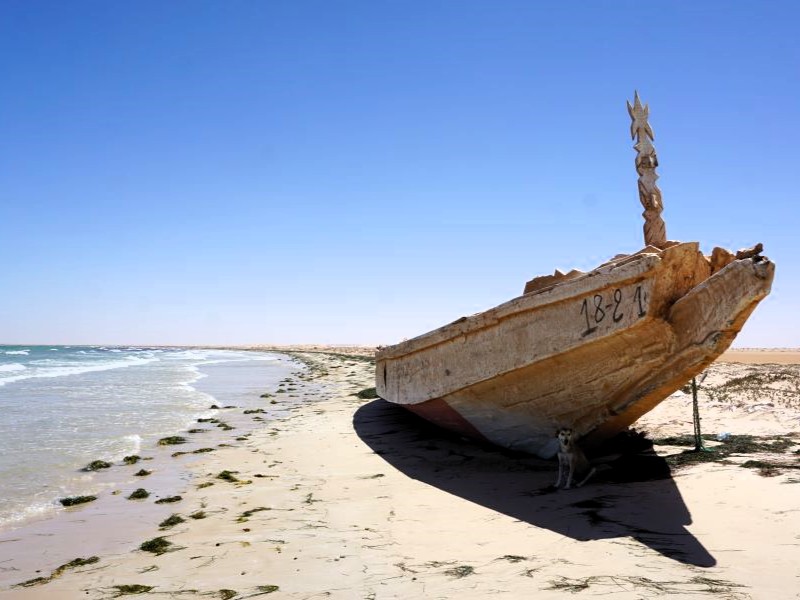
We visit an Imraguen fishing village, where unique traditional fishing methods are preserved: aboard sailboats (lanche)—which lack motors, as engine use is prohibited to protect the ecosystem—the fishermen enlist the help of dolphins to drive schools of mullet toward the nets near the shore.
In the afternoon we set off towards the capital crossing wonderful landscapes, racing with our 4x4s on these enormous, wide beaches inhabited only by crabs.
A sense of immense freedom and an experience unlike any other. Kilometers upon kilometers of completely empty beach!
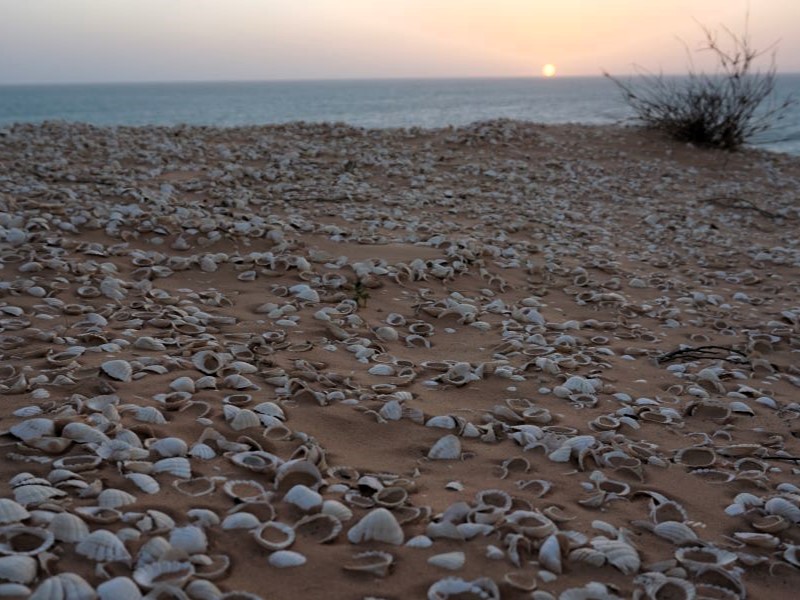
We enjoy one of the most romantic sunsets from atop a dune, and reach Nouakchott late in the evening!
Nouakchott Visit
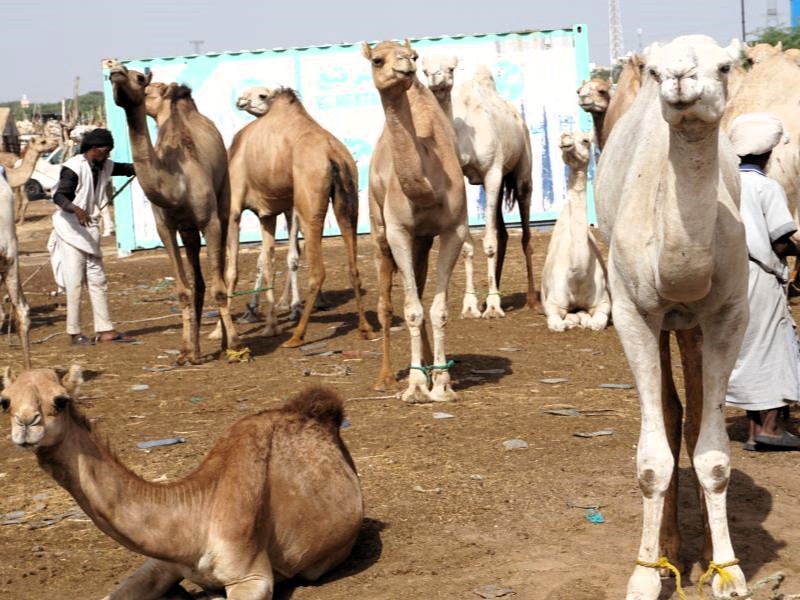
Dromedary market.
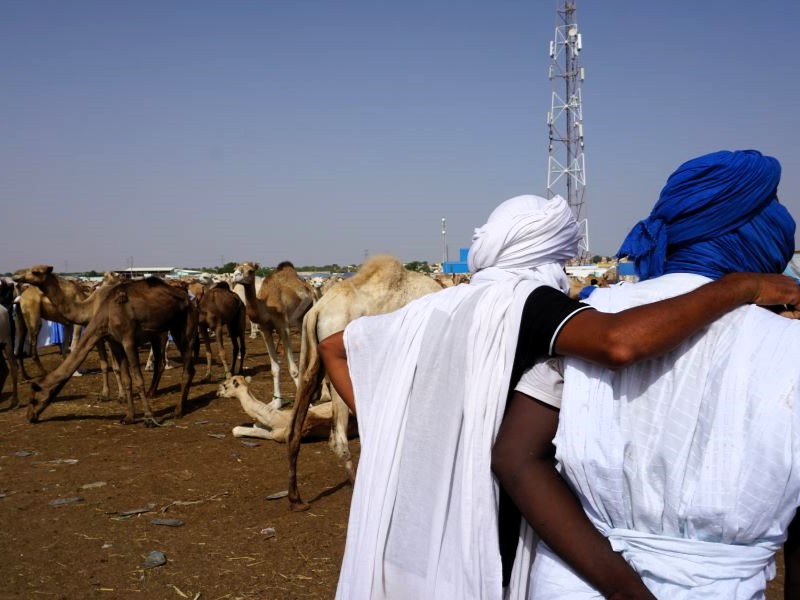
As the second-largest in Africa, this market sees the trade of more than 250 dromedaries daily. They may be destined for transport, slaughter, or milk production, and every negotiation is conducted discreetly through verbal agreements that carry the same weight as a written contract.
Each dromedary bears a hot-iron brand identifying its tribe of origin, and they can cost between 350 and 2,000 euros each.
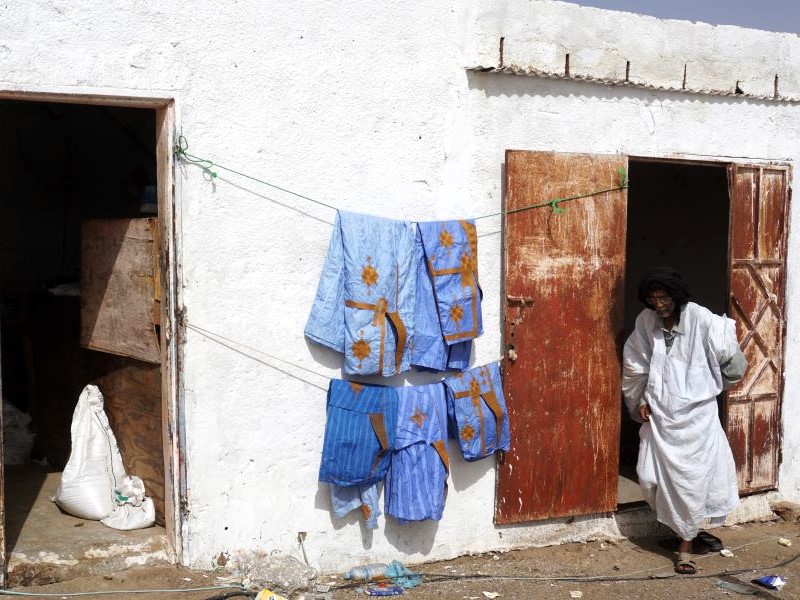
It is a lovely sight to see merchants, wrapped in traditional blue boubou robes, haggling and relaxing over tea; it is even said that Mauritanian retirees spend much of their day here.
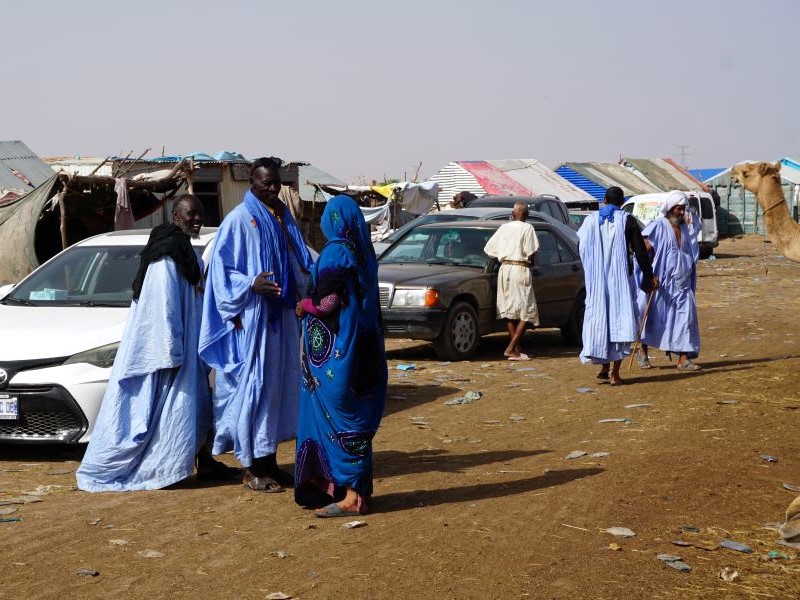
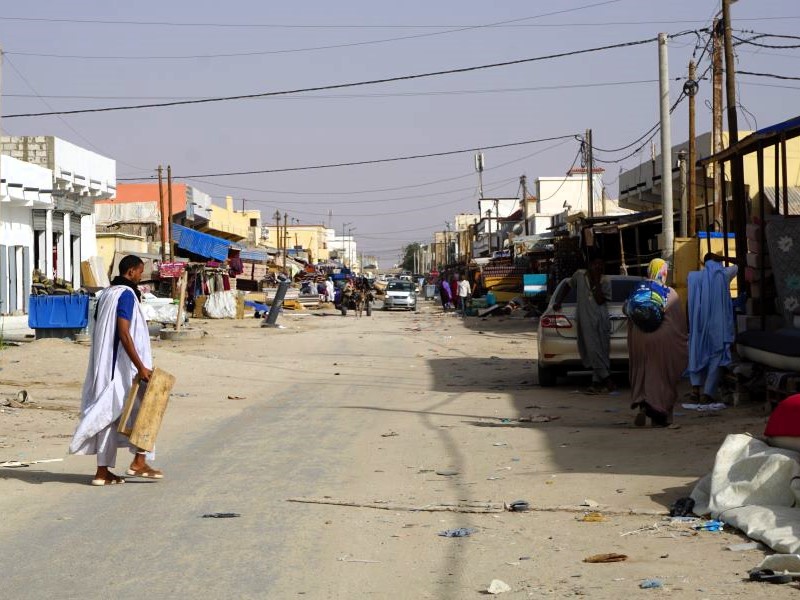
Nouakchott is a vibrant, lively city that juxtaposes particularly affluent areas with impoverished ones. Its markets are chaotic, and just about everything is sold there.
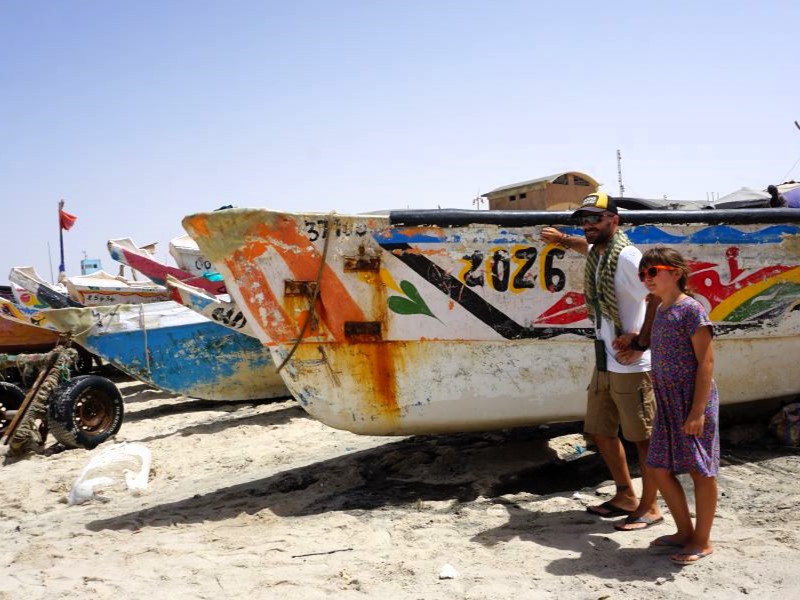
The “Marché aux Poissons” (fish market) is stunning—one of the most iconic spots.
If you consider that Mauritania possesses some of the most fish-rich waters in the world, you can immediately imagine how abundant its shoals of swordfish, tuna, red mullet, and so on must be.
There is even an area dedicated to dried and salted fish.
The beach fills with buyers as the boats approach, returning from their fishing trip; vendors shout, and women in traditional *melhafa* robes help carry baskets of freshly purchased fish, while nearby, elderly fishermen skillfully mend large nets. It is a truly evocative scene.
Divorced women's market
Souq Al-Rahma, established in the 1980s to address the growing economic hardships resulting from high separation rates, stands today as a prime example of economic empowerment and female solidarity.
Here, in the event of divorce, all the assets of the marital home go to the wife, partly because the husband has no financial maintenance obligations.
The woman is putting all the furnishings up for sale to raise cash and fund her children's education.
Thus, a genuine independent business of her own is born for the woman.
Divorce, however, is not viewed with shame or disdain; parties featuring dancing and banquets are even organized, partly because a divorced woman is seen as more mature, experienced, and attractive—often even drawing new marriage proposals.
While chatting with Deida, a market vendor, she confided in us that this was the best thing that could have happened to her, because now she is a business owner and can provide for herself and her children without depending on others.
A trip to Mauritania is not easily forgotten.
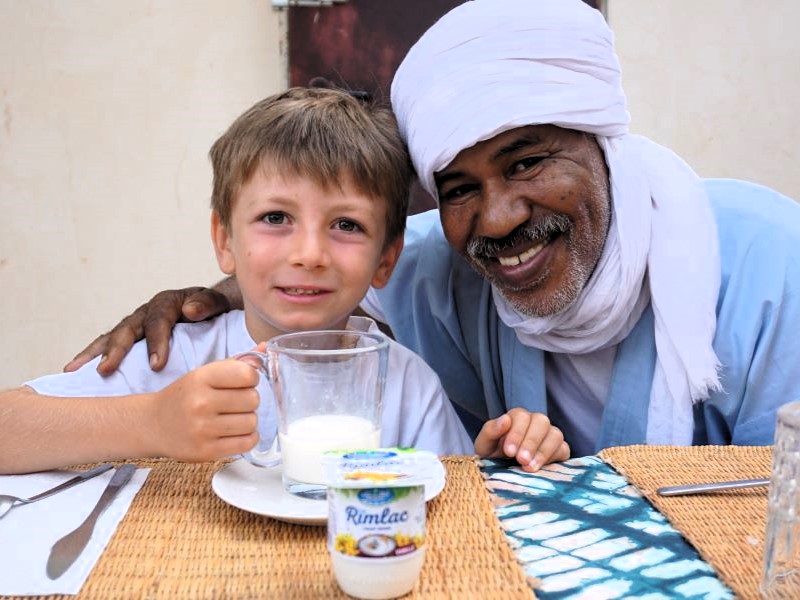
It welcomes you with the silence of the Sahara dunes, dazzles you with the colors of the Nouakchott market, and fills your heart with the slow ritual of tea—always served with plenty of foam as a sign of respect and welcome.
Merci Mauritania

Error: No feed found.
Please go to the Instagram Feed settings page to create a feed.